Birth Chart
Capricorn Rising Meaning: The Ascendant That Ages in Reverse, and Saturn's 2027 Square
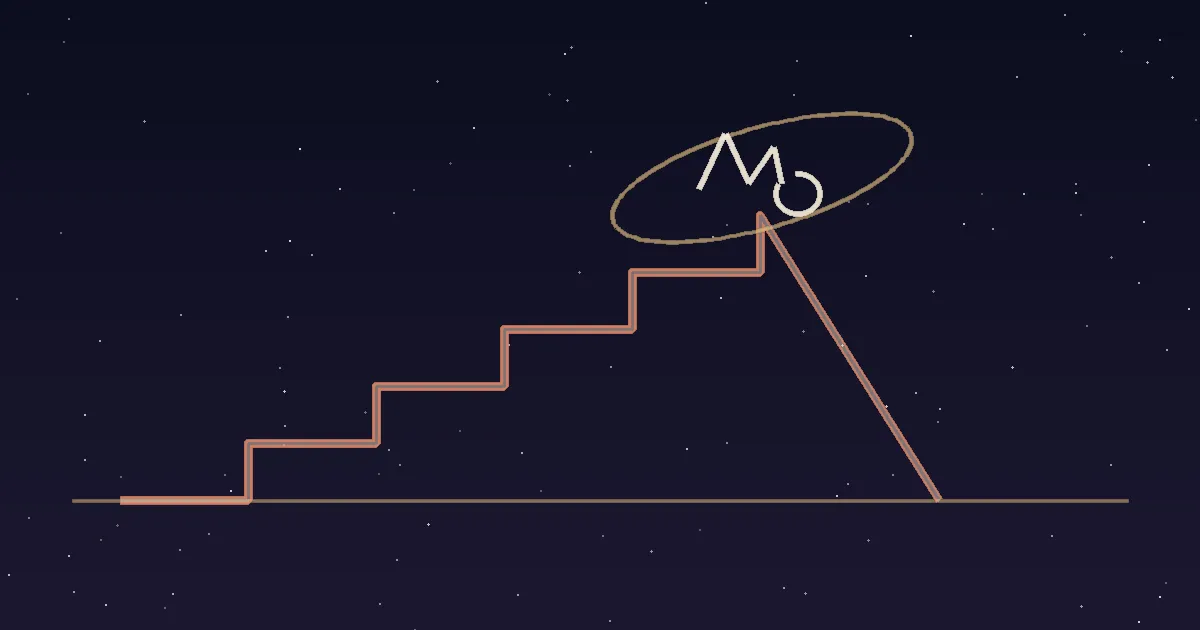
Capricorn rising is the ascendant that ages in reverse: an old child, a heavy young adulthood, and then — on Saturn's schedule, not yours — a lightening that keeps going for the rest of your life. Everything else people say about this placement is a partial view of that machine. Cosmopolitan's version is the front of it (the vibe of wearing a business suit even when they're not); the pushback in r/astrology's long "Trying to understand Capricorn Rising" thread is the back of it — a top answer insists this is a "go against the grain," not a "go with the flow" rising, and that reading it as career-obsession misses the point entirely.
This guide opens the machine: the Saturn rulership that builds the composed exterior, the childhood where the armor got fitted, the compatibility axis that imports the missing warmth, and the timeline that pays out late but pays with interest. It's the eleventh entry in our rising sign series, written alongside Libra rising to finally complete the set.
Quick answer
Capricorn rising means Capricorn was crossing the eastern horizon at your birth. It gives a Saturn-ruled first impression — composed, capable, reserved — and an instinct to master situations before trusting them. Saturn becomes your chart ruler, which front-loads life's weight and back-loads its rewards: this is the ascendant that famously gets younger with age.
| Placement | Capricorn rising (ascendant in Capricorn) |
| Chart ruler | Saturn — its sign, house & transits run your chart |
| Element & modality | Cardinal earth |
| First impression | Composed, competent, hard to fluster |
| Descendant (partner axis) | Cancer — drawn to warm, openly caring people |
| Shadow | Armor as identity; asking for nothing, ever |
The ascendant changes every two hours — birth time required. Pull your free ZodiScope chart to confirm your rising sign and locate the Saturn that rules it.
Find your rising sign on ZodiScope →What it means to be a Capricorn rising
Your rising sign is the zodiac sign that was crossing the eastern horizon at your exact birth moment and place — the reason it changes every couple of hours and can't be looked up from a birthday alone. It functions as the chart's interface: the reflexive approach, the first read people get. (Mechanics and all twelve versions in the complete rising guide.)
Capricorn on the horizon builds the interface out of cardinal earth: initiate by structuring. Walk into chaos, find the real problem, quietly take responsibility for it — which is why the placement reads as mature at nine years old and unflappable at thirty. The Capricorn profile describes this as an ambition; on the ascendant it's closer to a posture.
And the structural fact that outranks every trait list: Saturn rules Capricorn, so Saturn rules this chart. In the traditional framework running back to Ptolemy's Tetrabiblos, the ascendant ruler's condition colors the whole nativity — and having the zodiac's taskmaster in that seat is the single best explanation of the Capricorn rising life arc. Saturn charges early and pays late. Hold that; it's the "ages in reverse" section.
The armor: what the composed exterior is actually doing
The stereotype says career-obsessed. The self-reports say something different: what Capricorn risings describe is security-seeking — a deep, early-installed worry about stability, for themselves and for the people they consider theirs. Career is just the most legible container for it. Cafe Astrology's classic read agrees: big on family, forever worrying about security for themselves and their dependents. The ambition is downstream of the worry.
Astrologer Alice Sparkly Kat's Capricorn Rising Breakdown catches the mechanism in one word: gatherers. Capricorn risings collect — people, skills, resources, credibility — and build something that gets bigger and steadier over decades. It's the least flashy form of ambition that exists, which is why ELLE's "quiet luxury, understated power" framing landed so well: the placement's whole aesthetic is proof without announcement.
The shadow is the armor calcifying into the self. A Capricorn rising can go years being everyone's stable one without once being asked how they are — partly because they've made the question feel unnecessary. The "go against the grain" Reddit framing matters here: this rising doesn't comply its way to safety, it builds its way there, and it will absolutely build a life where no one ever needs to be asked for help. That's the trap. The Moon in Capricorn essay covers the same pattern one layer deeper — and if you have both, read it twice.
The rising is the armor — the Moon is what it's protecting. See your full sun, Moon, and rising profile, plus where your chart-ruling Saturn sits, in one free reading.
See your rising + chart ruler together →Ages in reverse: the Saturn timeline
The most consistent piece of Capricorn rising lore — repeated across traditions, forums, and consulting rooms — is that the placement lives its timeline backwards: an old child, a heavy young adulthood, and then, somewhere in the thirties, a strange lightening that keeps going. The traditional logic is straightforward. Saturn rules endings, limits, and time itself; give it the chart's steering wheel and its lessons arrive first, not last. The childhood tends to involve early responsibility — a serious household, adult problems visible too soon, competence demanded before it was age-appropriate.
But Saturn's deal is symmetrical: what it takes early, it returns with interest — if the work got done. The first Saturn return around age 29 is the hinge. For most people it's a disruption; for Capricorn risings it's often a graduation — the moment the structure they've been building since childhood finally gets certified, and the permission to be lighter arrives. Ask a fifty-year-old Capricorn rising: almost all of them describe being younger now than they were at twenty.
And 2027 is the year your chart ruler squares your Ascendant. Saturn has been in Aries, a cardinal square to Capricorn and your 4th house of home, since February 13, 2026; in 2027 it walks 8°20′ to 27°53′ Aries, which puts the exact square on any Capricorn Ascendant from 9° to 27°, twice in 2027 for 22° to 27° (a third pass follows in early 2028). The next section gives the dates by rising degree. If you were born with Saturn in Aries yourself (roughly 1996 to 1999, or 1967 to 1969), the transit doubles as your Saturn return. As chart ruler, every Saturn transit is personal weather for you in a way it isn't for other risings; the Capricorn monthly horoscope tracks the running forecast.
Capricorn rising in 2027: what does Saturn square your Ascendant from the 4th house do?
Saturn, your chart ruler, entered Aries on February 13, 2026 and stays until April 12, 2028. Aries is your 4th house of home, family and foundations, and it's square Capricorn, so the whole transit is your own ruler at a hard angle to your Ascendant. 2027 is the year it gets exact for most of you. Saturn starts the year at 8°20′ Aries, crosses 15° on March 17, reaches 21° on May 4, stations retrograde at 27°53′ on August 9, 2027 and backs down to 21°01′ by the December 23 direct station. The 2026 pass covered 0° through 14°45′; the 2027 walk covers 8°20′ to 27°53′. If your Ascendant is between 9° and 27° of Capricorn, Saturn squares it exactly in 2027.
What the square does, for this placement in particular: the planet that built the armor asks what it's protecting. Saturn in the 4th is the house move, the parent who needs care, the family arrangement that stops working, the question of where home actually is. Square the Ascendant, it lands on the surface too, as a tiredness the composed exterior can't quite hide. Saturn is in its fall in Aries, so the structure it demands is uncomfortable for Saturn itself, which is why Capricorn risings tend to feel this transit as being asked to build without the usual blueprint. The ages-in-reverse timeline is still running. This is one of the heavy years inside it, and the one where the lightening afterward gets earned.
| Capricorn Ascendant degree | Saturn's exact square in 2027 | Passes |
|---|---|---|
| 0° to 7° | Done: Saturn squared you once in early 2026 and does not return. Neptune sits square this band all year from the same 4th house (1°43′ to 6°39′ Aries, exact for 2° to 6°), the foggier housemate. | 0 in 2027 |
| 8° to 14° | Third and final pass, December 19, 2026 – March 8, 2027 (8° was re-crossed on December 19, 2026). | 1 (the last of 3) |
| 15° to 20° | One clean pass, March 17 – April 26, 2027. The April 6 New Moon at 16°57′ Aries falls in the same 4th house, 0°38′ from Saturn. | 1 |
| 21° | Crossed May 4, 2027; Saturn then stations direct almost exactly square this degree (21°01′) on December 23. | 1, plus the station |
| 22° to 27° | Triple pass: May 13 – July 8, 2027; retrograde September 11 – November 20, 2027; final January 26 – March 19, 2028. | 3 (the last in 2028) |
| 28° to 29° | The closing act: March 28, 2028 to April 5, 2028, just before Saturn leaves for Taurus on April 12, 2028. | 1 (in 2028) |
Crossing dates computed from the ephemeris in UT; allow a day either side for US time zones.
Set 2027 beside 2026 and the difference is this: Heavier for the middle and late degrees, lighter for the early ones, and simpler across the board. 2026 had the Saturn–Neptune conjunction opening the 4th-house era at 0° Aries; for most Capricorn risings 2027 is mainly one planet doing one clear thing, by degree. Pluto, meanwhile, is fully out of your 1st house (it left Capricorn for good in November 2024) and sits at 4°21′ to 7°10′ Aquarius in your 2nd, retrograde May 8 to October 17: the identity rebuild is over, and income, spending and ownership become the long-term work. The other dates for a Capricorn rising:
- January 7 and December 27: two New Moons in Capricorn, your 1st house. At 17°18′ and 5°50′, the year opens and closes with a reset on your own sign, and the July 18 Full Moon at 25°49′ sits between them.
- July 18: penumbral lunar eclipse at 25°49′ Capricorn, your 1st house. Borderline: so shallow that some almanacs list it as a plain Full Moon. On your Ascendant sign, closest for 23° to 28° risings, with the Sun opposite in your 7th. It tends to bring something already in motion to a head, often in a partnership, and it doesn't guarantee an ending.
- January 10 to April 1: Mars retrograde in your 9th and 8th houses. Mars stations retrograde at 10°26′ Virgo, backs into Leo on February 21 and stations direct at 20°56′ Leo. The study plan, the visa and the shared-money arrangement stall; the August 2 total solar eclipse at 9°55′ Leo lands in the same 8th house later, so the estate, the debt or the joint account gets its real decision in August.
- July 26: Jupiter enters Virgo, your 9th house. It leaves Leo (your 8th) on July 25 after its April 12 direct station at 16°59′ Leo. Jupiter is in detriment in Virgo, but from your 9th it trines the Ascendant, reaching Ascendants at 1° to 25° before the year ends: the degree, the move abroad, the publishing project, with Virgo's preparation attached.
- February 6 and August 17: eclipses at 17°38′ Aquarius and 24°12′ Aquarius, your 2nd house. The February one is the third of the Leo–Aquarius family that began in February 2026. Income and what you own, on the same axis as the August 8th-house eclipse.
- November 25: Mars and Venus enter Capricorn on the same day. Mars, exalted in your sign, stays in your 1st house into the new year; Venus keeps it company until December 18, 2027. A strong six weeks for stamina and for being seen. The October 7 to October 28 Mercury retrograde before it (from 4°55′ Scorpio back to 19°18′ Libra, your 11th to 10th) is the one to watch for career paperwork; the June 10 to July 4 one runs your 7th and 6th.
Our Saturn-in-Aries piece covers the transit in full, including the per-rising-sign read; the Aries rising page is the Ascendant Saturn is conjunct where yours takes the square, and the Cancer rising page takes the same square from the 10th. If you have a Capricorn Moon as well as the rising, the Moon in Capricorn page reads the two Capricorn New Moons from the inside.
Compatibility: the Cancer descendant
Opposite every ascendant sits the descendant — the 7th-house cusp, the partner profile the chart is structured to seek. Capricorn rising's descendant is Cancer, and the pairing logic is almost embarrassingly legible: the person who holds the perimeter marries the person who runs the hearth. Capricorn risings are consistently drawn to openly warm, feeling-forward, care-first people — the exact emotional directness the armor doesn't permit them — and the healthiest versions of this placement let the partner teach them that being cared for isn't a debt.
As always, the axis is the doorway and the whole chart is the verdict: emotional fit runs Moon-to-Moon (the moon compatibility framework), chemistry runs Venus–Mars (the synastry guide), and you can pull any partner's basics with the free Big 3 calculator before going deeper. Fellow earth-family context lives in the earth signs guide.
Is Capricorn rising rare? An honest answer
Rarer than average at northern latitudes, yes — and for once the reason is astronomy rather than flattery. Signs cross the eastern horizon at different speeds depending on where on Earth you're born; the ascension tables recording this go back to Ptolemy. At mid-northern latitudes, the arc from Capricorn through Gemini rises fast — these are the signs of short ascension — so the horizon spends less time in them and fewer people are born under them. Pisces and Aries are the rarest risings in the northern hemisphere, with Aquarius and Capricorn close behind; long-ascension signs like Virgo and Libra are the most common. Born south of the equator? The whole pattern flips.
So the "rarest rising" listicles have it half right and for the wrong reason. And there's a fitting irony in the numbers: about 27% of Americans believe in astrology (YouGov), and the Capricorn rising is the believer least likely to mention it at dinner — and the most likely to have quietly read the primary sources first. Which is the placement in one sentence.
A worked example: two Capricorn risings, two different Saturns
- Capricorn rising, Saturn in Taurus in the 5th house. The chart ruler in patient earth, in the house of pleasure and creation: the slow-craft version. Discipline flows into tangible things — a business built over decades, a garden, children raised with quiet steadiness. The armor is warm to the touch; the timeline is classic ages-in-reverse.
- Capricorn rising, Saturn in Libra in the 10th house. Saturn exalted, at the top of the chart: the public-structure version. Authority arrives early and heavily — the manager at 26, the family's decision-maker at 30 — and the life lesson is fairness under load, since Libra makes every hard call relational. More visible success, later thaw.
Same rising, different Saturn, different life. The houses guide and aspects guide cover the variables; your own configuration is a two-minute pull.
Find the Saturn running your chart
ZodiScope calculates your ascendant, chart ruler, houses, and aspects from your birth data — same JPL ephemerides the major calculators use — then reads each day's transits against your actual chart, including every move your Saturn makes. Free to start.
Pull your full birth chart on ZodiScope →Keep reading
- · Checking the Ascendant on its own is the job of the rising sign calculator. It takes the same three inputs and leaves the Ascendant blank rather than guess without a birth time.
- · The Mars side of Capricorn, for anyone who leads with it: the Capricorn Mars guide: why it's exalted and what that costs.
- · How ascendants work, all twelve: rising signs — the complete guide.
- · The other new rising in this series: Libra rising — the Venus ascendant.
- · Your chart ruler's transit, by degree: Saturn in Aries: dates, degrees and the per-rising-sign read.
- · Where Capricorn lands in the year's ranking, and why: the unluckiest zodiac signs of 2027, ranked by transit.
- · The hinge of the Saturn timeline: Saturn return — what it means and when it happens.
- · The same sign one layer deeper: Moon in Capricorn — the Moon in detriment.
- · New here? The sun, moon & rising calculator or all journal articles.
- · Born in 1984 or 1998? Both years change Neptune sign mid year: Neptune in Capricorn, the Millennial Neptune.
FAQ
Is the July 2027 lunar eclipse in Capricorn a big deal for Capricorn rising?
Less than the headline suggests, and here's the honest version. The July 18, 2027 Full Moon at 25°49′ Capricorn is a penumbral lunar eclipse so shallow that some almanacs list it as a plain Full Moon. It falls in your 1st house, so it's on your Ascendant sign, closest for Capricorn risings at 23° to 28°. Treat it as a strong Full Moon about the body, the public face and a relationship that has reached its verdict (the Sun sits opposite in Cancer, your 7th), not as the year's turning point. The turning point for this Ascendant in 2027 is your own chart ruler: Saturn walks 8°20′ to 27°53′ Aries in your 4th house of home and family, squaring the Ascendant degree by degree, with the retrograde giving 22° to 27° two exact passes in 2027 and a third in early 2028. That, plus Pluto sitting fully outside your 1st house at 4°21′ to 7°10′ Aquarius, is the story of the year. The eclipse is a footnote to it.
What does it mean to be a Capricorn rising?
Capricorn rising means Capricorn was the sign crossing the eastern horizon at the moment and place you were born. The rising sign is your chart's interface — the first impression, the instinctive approach to new situations — and with Capricorn there, the interface is run by Saturn: composed, self-contained, older-than-your-age capable. People read you as someone who has it handled, sometimes before you've said a word. It also makes Saturn your chart ruler, meaning Saturn's sign, house, and transits shape your life with unusual force — including the famous pattern where life genuinely lightens as you get older.
What is Capricorn Rising compatible with?
Start with the descendant — the sign opposite your ascendant, which describes the partner energy your chart is structured to seek. For Capricorn rising that's Cancer: warmth, care, emotional directness, someone who runs the hearth while you hold the perimeter. It's why the composed, self-sufficient Capricorn rising so often ends up with the openly feeling, nurturing partner — the chart is importing what the armor keeps out. Beyond that axis, real compatibility is a two-chart question: your Moon against theirs for emotional fit, Venus–Mars contacts for chemistry. The rising-sign pairing is the doorway, not the verdict.
Which rising sign is the rarest?
Rising signs are not evenly distributed, and the reason is astronomy, not mystique: signs cross the eastern horizon at different speeds depending on latitude — a fact recorded in ascension tables since Ptolemy. At mid-northern latitudes (most of North America and Europe), the signs from Capricorn through Gemini rise fastest, so fewer people are born while they're ascending. That makes Pisces and Aries the rarest risings there, with Aquarius and Capricorn close behind — so yes, Capricorn rising is genuinely on the rarer side in the northern hemisphere. Southern-hemisphere births flip the pattern.
Is Capricorn Rising a good placement?
Yes — with Saturn's terms attached. The costs are real and front-loaded: a serious childhood, an exterior that reads as guarded, being treated as the responsible one before anyone asked if you wanted the job. The payoffs are also real and back-loaded: competence that compounds, respect that arrives on schedule, and the widely-reported experience that life gets easier, warmer, and funnier with age — the placement that ages in reverse. Traditional astrology also counts one technical credit: Capricorn rising charts are ruled by Saturn, and a well-placed Saturn gives the whole chart spine. It's a slow-burn placement, not a hard one.